


HOME  PLAY CHESS  CHESS RULES  TACTICS  PROBLEMS   STUDIES   QUIZ   BOOKS


Chess opening principles

You must learn at least a few chess openings.

You can read detailed explications on the chess openings page. If you don't know or your opponent doesn't play according the chess openings , you should make the moves by using these principles. Of course you should decide which principles you will use according the situations in the game.

  • You should move your pieces in order to control the central squares e4 , e5 , d4 , d5 .
  • You should move central pawns first.
  • Try to not move the same pieces twice if there is not an obligatory situation.
  • Move knights and bishops first , then place your king in a secure corner by castling. Then move your queen. But don't attack at the opening by the queen . This most powerful piece will be threatened by the less valuable pieces ( bishop, knights, pawns ) of your opponent and you will waste your time when you try to protect your queen.
  • The knights must be developed to f3 instead h3 , to c3 instead a3 for White . They must be developed to f6 instead h6 , to c6 instead h6 for Black
  • Use rooks to control open and/or half-open lines.
  • Do not attack early. Develop all your pieces before the attack.

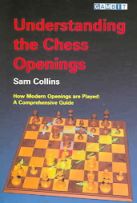
Understanding The Chess Openings: How Modern Openings Are Played, A Comprehensive Guide
by Sam Collins
book-understanding-openings
This major new work surveys all chess openings, providing a guide to every critical main line and featuring descriptions of the typical strategies for both sides.


Chess Openings: Traps and Zaps
by Bruce Pandolfini
book-chess-openings-traps
202 short "openers" typical of average players, arranged according to the classical opening variations and by level of difficulty. Each example includes:
* the name of the overriding tactic
* the name of the opening
* a scenario that sets up the tactic to be learned
* an interpretation that explains why the loser went wrong
* a review of important principles and useful guidelines .


book Search other chess opening books:
AbeBooks.com  Passion for books. Search millions of books from thousands of sellers
Search by:
Free-Shipping  Free shipping   Signed   First Edition 
 
Examples

No. 1


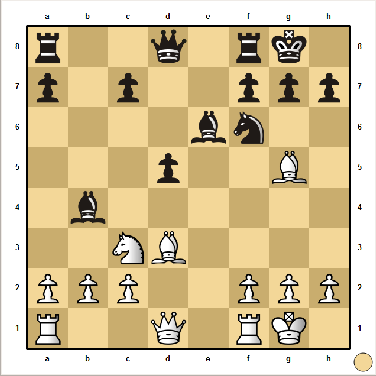
As you see in the diagram No.1 and the notation below , White and Black haven't played their queen yet. They have castled and their king are on the secure squares. Opponent knights are pinned by the bishops


Scotch opening : (diagram No.1)
1. e4, e5 2. Nf3, Nc6 3. d4, exd4 4. Nxd4, Nf6 5. Nc3, Bb4 6. Nxc6, bxc6 7. Bd3, d5 8. exd5, cxd5 9. 0-0, 0-0 10. Bg5, Be6

No. 2


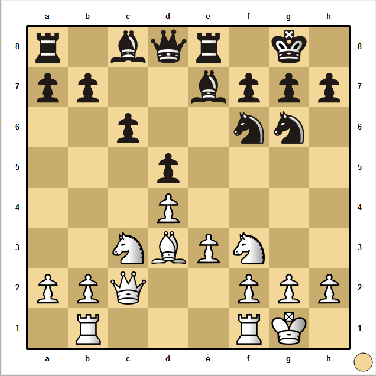
White and Black developed their minor pieces ( knights and bishops ). They have castled . White is developed well and controls the central squares by a lot of pieces. Black's rook is controlling half open e line , the knights are controlling central squares.

Queen's gambit declined samisch variation : (diagram No.2)
1. d4, d5 2. c4, e6 3. Nc3, Nf6 4. cxd5, exd5 5. Nf3, Nbd7 6. Bf4, c6 7. e3, Be7 8. Bd3, 0-0 9. Qc2, Re8 10. 0-0, Nf8 11. Rab1, Ng6

Chess opening wizard

Use this chess openings wizard to learn more

 Other chess tactics --- N Chess news